
Thirsty Machines, Data Centers Power and Water Appetite Draws Growing Scrutiny.
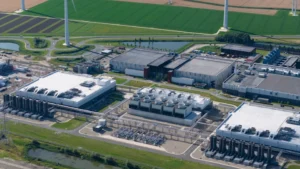
Bell Canada’s 300-megawatt AI campus near Regina skipped environmental review
New studies put AI’s physical footprint in nation scale numbers, while industry pushes back and states scramble to regulate.
The environmental footprint of data centers already rivals some of the world’s largest countries, and their water and energy use could double in just four years as artificial intelligence scales up. According to a United Nations University report released in June they projected their electricity, water, and emissions to roughly double by 2030 as artificial intelligence grows.
The numbers are stark. Global data centers used 448 trillion watt hours of electricity last year, more than all but 10 countries in the world, the report found. That consumption produced about 208 million tons of carbon dioxide, roughly the same as Argentina, and generating that energy consumed about 1.2 trillion gallons of water. About 20% of data centers energy is currently attributable to AI, a share expected to reach 40% by 2030.
Jean Su, director of the Energy Justice Program at the Center for Biological Diversity, told the media that the report matters because, it is the first global accounting “that shines a light on the environmental harms of AI.”
The water behind the watts
Direct cooling is only part of the picture. A report published in August by the think tank Ceres, “The Water Behind the Watts,” found that in the seven states with the highest concentration of data centers they use of about 3.4 trillion gallons of freshwater per year for electric power generation. 10.4 million acre-feet, exceeding the 8 million-acre-foot average annual flow allocation of California’s major water projects, as reported by Bloomberg Law. Few power producers, the report noted, have connected rising data-center demand to water supply risk.
“The truth of the matter is that the power and water facilities won’t be able to keep up,” Kerri Hickenbottom, an associate professor of engineering at the University of Arizona who studies data center water use.
The indirect water story is the least visible one. University of Michigan researchers estimated that off-site water used to generate electricity would add 14 billion gallons to the annual consumption of just three large AI data centers planned in that state. At Meta one of the only developers to publicly disclose indirect use “off-site” water accounted for roughly 96% of the 21 billion gallons the company consumed in 2024. A near-120% increase from 2021, according to its sustainability report.
Most large modern data centers cool with evaporation because it is energy efficient, especially in hot climates. A trade-off the University of Georgia’s Cooperative Extension describes bluntly, the method directly consumes water, often drawn from the same municipal systems residents depend on. Researchers cited by the extension found nearly half of U.S. data center servers are powered, at least in part, by plants in water-stressed regions.
The pushback
Not everyone accepts that narrative. A National Review analysis published in August argued that even counting indirect consumption through power generation, data centers account for less than 1% of total U.S. water consumption, and that they must acquire water through the same permits and water rights purchases as any other business. The outlet called the idea that data centers are “guzzling the nation’s reservoirs” a fiction, while conceding that demand will grow sharply.
Community involvement is driving the industry toward transparency. In June Amazon disclosed that its data centers use 2.5 billion gallons of water annually. A disclosure that includes both water evaporated in cooling, and water discharged to wastewater systems. Water researchers and community advocates countered that site-level data is the only way the public can actually evaluate the industry’s footprint, and Amazon framed its figures as to imply it cools more efficiently than some of its peers.
Regulators and communities start to catch up
States are beginning to respond. In Tennessee, lawmakers passed a measure requiring owners of data centers drawing at least 50 megawatts to pay for the infrastructure upgrades needed to serve them. Just one of several bills in the state addressing disclosure of electricity and water use. The Tennessee Valley Authority separately approved a deal allowing Elon Musk’s Memphis-area xAI operations to purchase up to 300 megawatts of power.
The scale of the challenge is laid out in a July report from the Kansas Health Institute, U.S. data centers consumed an estimated 183 terawatt-hours of electricity in 2024. More than 4% of the nation’s electricity, and directly consumed an estimated 17 billion gallons of water in 2023. A figure that could double or quadruple by 2028 under scenarios modeled by Lawrence Berkeley National Laboratory.
Meanwhile, the Environmental Law Institute has warned that more than 160 new AI related data centers have been built in water stressed regions over the past three years. The think tank cautions that data centers are often approved as ordinary industrial projects, even though their energy and water needs increasingly resemble heavy infrastructure.
What to watch
The debate is no longer over whether data centers use large amounts of power, and water, they do. How much of it is sustainable is where the burden falls, and who gets to see the numbers. Expect moratorium fights, mandatory disclosure laws, and cooling-technology shifts, (closed-loop and air cooling, recycling) to dominate the next phase. As one researcher put it to reporters, the indirect water use has received “much less attention… even though that oftentimes is significantly higher than the direct water usage.”
Sources
AP News — “UN calculates nation-sized environmental footprints for AI and data centers” (June 3, 2026); United Nations University report figures
Bloomberg Law — “Data Centers Use More Water than California Cities, Study Says” (Aug. 25, 2026), on the Ceres report “The Water Behind the Watts”
Los Angeles Times / Insurance Journal — “AI’s water strain includes surging demand from electricity use” (Oct. 13–14, 2026), incl. quotes from Shaolei Ren (UC Riverside) and Kerri Hickenbottom (University of Arizona), and Meta’s 2024 sustainability data
Bloomberg — “Amazon Says Its Data Centers Use 2.5 Billion Gallons of Water” (June 11, 2026)
Utility Dive — “US data center electricity use could more than double by 2030, water use could quadruple by 2028” (July 21, 2026), on the Kansas Health Institute report and Lawrence Berkeley National Laboratory modeling

 -
 -
 -
 -
 -