
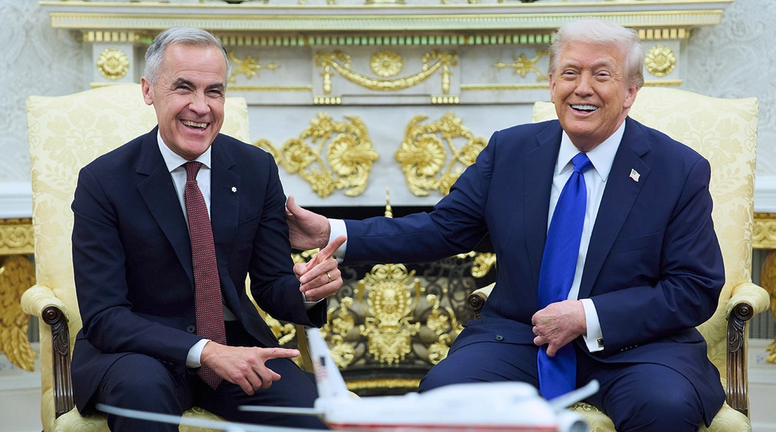
Interim Canada-U.S. deal could ease Tariff Pressure
Washington and Ottawa Race Toward Interim Trade Deal as Year End Deadline Looms
Talks intensify over steel, aluminum and auto tariffs after August collapse, but still no agreement on paper yet
Canada and the United States are working toward an interim tariff arrangement by the end of the year, according to sources speaking to News outlets, as the two countries attempt to defuse a trade war that has escalated repeatedly since the summer.
The prospective interim deal is being discussed rather than a sweeping new trade agreement. The deal would cover U.S. Section 232 tariffs on Canadian steel, aluminum, autos and lumber, as well as additional duties imposed in August after the last round of negotiations broke down. News outlets reported that there was a meeting between Canadian Trade Minister Dominic LeBlanc and the federal Canada – U.S. economic advisory committee on Thursday.
Prime Minister Mark Carney said Sunday that he held a “constructive conversation” with President Donald Trump and that negotiating teams would work “in the coming weeks” toward an agreement, according to the Associated Press. The exchange marked hope for a resolution in a dispute that has strained relations for more than a year. Prime Minister Carney acknowledged days earlier that the countries were not yet in a position to finalize anything before the U.S. midterm elections.
The tensions trace back to 2025, when the Trump administration targeted Canada, Mexico, and China with new duties despite the existing United States–Mexico–Canada Agreement and deeply integrated North American supply chains, particularly in the auto sector.
Negotiations reached a crisis point in August, when Canada walked away from the table after rejecting U.S. demands that Carney said threatened Canadian sovereignty, French language protections and the auto industry. Trump responded with 50% tariffs on roughly $20 billion worth of Canadian goods, prompting Canadian retaliation, and threatened even more punitive levies on autos, car parts and steel effective Jan. 1 if the differences remain unresolved.
Reports surfaced in late October that the talks focus on easing tariffs imposed under Section 232 of U.S. trade law, including duties of up to 50% on Canadian steel and 25% on automobiles.
Neither side has held formal negotiations since August, though officials including U.S. Trade Representative Jamieson Greer and Commerce Secretary Howard Lutnick, who has been in regular contact with LeBlanc since Trump and Carney spoke by phone on Oct. 21 and have kept channels open.
Carney and Trump talk at APEC Summit
Carney described a meeting with Trump on the sidelines of the APEC summit in China as “reasonably direct” but said it produced no breakthrough. With the talk of an intern agreement it suggests that the two trade partners are seeking a deal before the Jan. 1 deadline .

 -
 -
 -
 -
 -