
Falling Behind: Mortgage Arrears in Ontario Are Growing Faster Than Anywhere Else in Canada
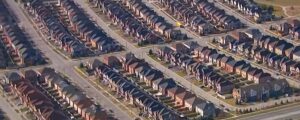
When mortgage rates plunged during the pandemic, Canada’s homeowners looked untouchable. The share of mortgages at the country’s biggest banks that were 90 or more days behind on payments fell to a record low of 0.06% in Ontario in 2021 and 2022, according to Canadian Bankers Association (CBA) data going back to 1995. Fewer than one in a thousand Ontario borrowers was seriously delinquent.
Four years later, that number has grown nearly sixfold,and the province that led the boom is now leading the bust.
The national picture,still low, but climbing
As of July 2026, the most recent CBA data available, 14,270 of the 4,911,806 mortgages held at Canada’s ten reporting banks 0.29% were 90 or more days overdue. The CBA notes that more than 99% of Canadian mortgage holders at a bank are not seriously delinquent, and that the country’s arrears rate remains among the lowest of any advanced economy.
But the direction matters as much as the level. The rate sat at record lows during the pandemic and has risen steadily since. In a research paper cited by the CBA, Examining the macro drivers of mortgage arrears in Canada. Analysts estimate that a one percentage point increase in the unemployment rate produces roughly a 0.1 percentage point rise in the arrears rate. A softening labour market, economists warn, would keep pushing the numbers up.
Ontario overtakes the country
What sets the current cycle apart is where the stress is concentrated. Ontario’s arrears rate climbed from 0.20% in April 2025 to 0.34% by July 2026, according to the CBA’s monthly provincial data. On a quarterly basis, Ontario stood at 0.32% in the second quarter of 2026, up from 0.21% a year earlier and from a pandemic low of 0.06%.
In September 2025, Ontario’s arrears rate crossed above the national average, an event that has historically happened only twice. The last time was between 1991 and 1996, during the worst real estate crash in Canadian history, according to the financial research site Better Dwelling. By January 2026, Ontario’s rate then 0.29% was the highest since 2011 and nearly five times its 2022 record low.
In CMHC’s fall 2026 Residential Mortgage Industry Report, based on Equifax credit bureau data covering 18 large cities. Found that Toronto, London and Windsor recorded the country’s largest year over year increases in mortgages 90 or more days behind, each rising by 0.09 percentage points. Seven of the eight largest city level increases were in Ontario, the exception was Vancouver. In Windsor, the delinquency rate rose from 0.17% to 0.26% up by half in a single year. Only Regina, at 0.37%, ranks higher among the tracked cities, and its rate is falling.
The severity shows up in balances, not just borrower counts. In the Greater Toronto and Hamilton Area, 11.1% of mortgage loan balances were 90 or more days in arrears in early 2026, up from 3.0% in late 2023, nearly three times the 3.8% rate in the rest of Canada. Analysts attribute the out sized share partly to the region’s larger average mortgages: with average GTA sale prices around the million-dollar mark, even identical percentage increases translate into much bigger missed payments.
Why now, the renewal wave meets a weaker economy
Borrowers who bought or renewed at the lowest rates in Canadian history have been renewing into a much higher rate environment over the past several years. The last of the pandemic era mortgages are only now coming up for renewal, and survey data reported in 2026 found that 38% of borrowers expect their monthly payment to increase at renewal. Meanwhile, the Bank of Canada raised its key interest rate again in late October 2026, its first hike since 2023. After sixteen months of cuts failed to revive a cautious, drifting housing market.
Household finances are stretched beyond the mortgage itself. Equifax and TransUnion both reported in 2026 that total Canadian consumer debt hit a record above $2.6 trillion in the second quarter, with more Canadians falling seriously behind on payments. With most of the stress concentrated in Alberta, Saskatchewan and increasingly, Ontario. A November 2026 Equifax financial literacy survey found that 27% of Canadians worry their financial health could derail a major financial milestone in the next year, rising to 49% among adults aged 18 to 34.
The Bank of Canada’s own researchers have mapped how the road to default typically begins. In a recent staff report on mortgage default patterns, they found that households tend to lean more heavily on credit cards and lines of credit about two years before their first missed mortgage payment. As of November 2025, outstanding residential mortgage debt in Canada stood at about $2.4 trillion, roughly 73% of national GDP and 74% of total household debt.
CMHC, for its part, expects the Ontario surge to continue. The agency projects the largest and most sustained increase in mortgage arrears in the country will persist in Ontario through mid-2027, concentrated in the Greater Toronto area and southwestern Ontario, with the province’s arrears rate approaching levels last seen around 2008.
Context and caution
None of this yet resembles a systemic crisis. The national arrears rate of 0.29% is still close to the long term average of around 0.3%, and banks as the CBA emphasizes, have tools to work with troubled borrowers before delinquency becomes default. In the previous downturns that Ontario’s current trajectory echoes the early 1990s, rates eventually stabilized and markets recovered, painfully slowly.
But the pattern economists keep returning to is the same one that makes this story more Ontario’s than anyone else’s. Investor heavy buying at the peak of the boom, record mortgage sizes, and a renewal wall that converts rate shocks into missed payments one household at a time. Whether 2026 proves to be a warning or a rehearsal will depend on employment, the variable the CBA’s own research says drives the arrears curve, with a lag of about a year.
Sources
Canadian Bankers Association — “Mortgages in arrears in Canada – what the numbers mean” (cba.ca): national rate of 0.29% as of July 2026; definition of arrears (90+ days overdue); CBA research on unemployment-to-arrears relationship.
Pekoe Mortgages — “Mortgage Arrears in Canada 2026” (pekoe.ca): CBA monthly data, 14,270 of 4,911,806 mortgages in arrears as of July 2026; Ontario rate 0.20% (April 2025) to 0.34% (July 2026).
Open Data Canada — “Mortgage Arrears in Ontario 2026: Highest Since 2011” (29 Oct 2026): CMHC Residential Mortgage Industry Report, Fall 2026 (Equifax data); city-level increases (Toronto, London, Windsor each +0.09 pp; Windsor 0.17%→0.26%; Regina 0.37% highest); Ontario Q2 2026 rate 0.32% vs 0.21% a year earlier and 0.06% low in 2021–22; GTHA 11.1% of balances 90+ days behind vs 3.0% in late 2023 and 3.8% rest of Canada; Bank of Canada rate hike, first since 2023.
Better Dwelling — “Ontario Mortgage Arrears Rate Tops Canadian Average, A Rare Warning” (Feb 2026): Ontario surpassed the national rate in September 2025; only prior occurrence 1991–1996; January 2026 rate 0.29%, highest since 2011, ~5x 2022 low; and “Ontario Mortgage Arrears To Keep Surging, Led by Toronto: CMHC” — CMHC projection of the largest, most sustained increase through mid-2027, concentrated in GTHA and southwestern Ontario, approaching 2008 levels.
Yahoo Finance / Financial Post — “Consumer debt hits record $2.6 trillion as more Canadians fall behind on payments”: Equifax Q2 2026 consumer debt $2.68T; TransUnion $2.64T; delinquency stress concentrated in Alberta, Saskatchewan and Ontario; Equifax VP Rebecca Oakes commentary.
Yahoo Finance / Financial Post — “Heading for a mortgage default? Bank of Canada research lays out three telltale signs”: BoC staff report; households increase consumer-credit reliance ~2 years before first delinquency; $2.4T residential mortgage debt as of Nov 2025 (~73% of GDP, ~74% of household debt).
Yahoo Finance / GlobeNewswire — Equifax Canada Financial Literacy survey (3 Nov 2026): 27% of Canadians worried about financial milestones; 49% among ages 18–34.
Yahoo Finance — “As the last of the pandemic-era mortgages come up for renewal…”: 38% of borrowers expect payment increases at renewal.
Yahoo Finance — “The Bank of Canada’s rate cuts have failed to lift the housing market”: 16 months of cuts, BoC holding steady, expert commentary (Ron Butler, Butler Mortgage; Benjamin Tal, CIBC).
Note: All figures are as published by the cited sources as of November 2026. The CBA counts mortgages 90 or more days in arrears at member banks; CMHC/Equifax figures use credit bureau data and cover a broader lender universe, which is why the two sets of numbers differ.

 -
 -
 -
 -
 -